
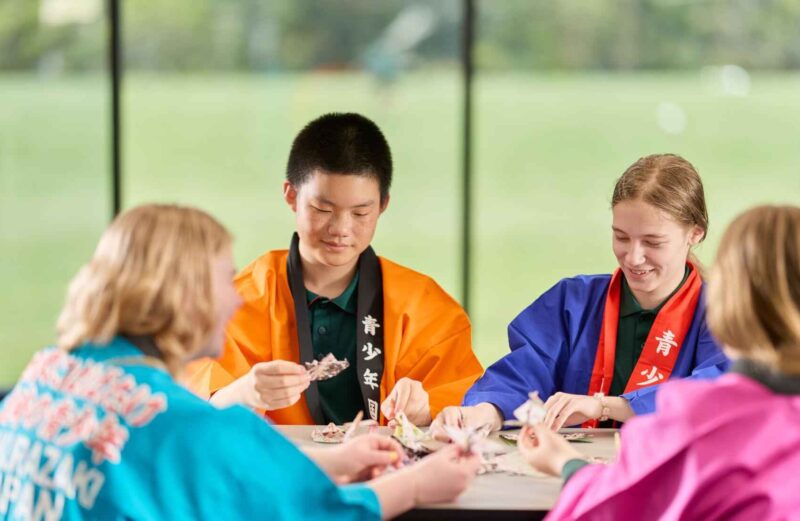
Cultural exchange gives teenagers the opportunity to understand different ways of life, build communication skills and question assumptions they may have never examined before. Through everyday experiences with people from other countries, young people can develop a broader perspective on the world, become more independent and learn how to navigate unfamiliar social environments with greater confidence.
What cultural exchange means for teenagers
Cultural exchange is about sharing everyday life, not simply visiting another country. It can take place through school exchanges, international youth projects, host-family stays, community activities and friendships between students from different backgrounds. These experiences expose teenagers to different customs, values, languages and ways of approaching familiar situations.
For young people, the most meaningful lessons often emerge from ordinary moments. Sharing a meal, joining a school club or discussing family traditions can reveal how differently people organise their lives. Teenagers begin to recognise that practices they once considered universal may be shaped by local history, social expectations and individual experience.
Direct interaction makes cultural differences easier to understand. Reading about another country provides useful background, but spending time with its residents introduces details that are difficult to capture in books. Students can discover regional differences, generational perspectives and individual personalities that challenge simplistic ideas about an entire nation.
How cultural exchange builds a global perspective
A global perspective develops when young people learn to consider more than one point of view. Teenagers naturally interpret unfamiliar situations through the experiences and expectations they already know. Cultural exchange encourages them to pause, ask questions and consider why another person might understand the same situation differently.
This ability is useful well beyond international travel. In multicultural classrooms, workplaces and neighbourhoods, people regularly encounter different communication styles and expectations. Learning to approach these differences with curiosity rather than immediate judgement can make collaboration more constructive and reduce unnecessary misunderstandings.
Recognising assumptions and stereotypes
Personal relationships can challenge generalisations more effectively than abstract arguments. A teenager who makes friends with students from another country begins to see the variety within that culture. Their classmates may have different interests, beliefs, family backgrounds and ambitions, just like people in their own community.
This does not mean every cultural difference disappears after an exchange. Some customs may remain unfamiliar, and disagreements can still arise. The important development is learning to distinguish between a genuine difference in values, an individual preference and a mistaken assumption about a whole group.
Teenagers can strengthen this skill by asking open questions, listening to explanations and avoiding conclusions based on a single experience. Curiosity creates more room for understanding than expecting every person to represent their country or culture.
Communication skills that grow through cultural exchange
Communicating across cultures requires more than speaking another language. Vocabulary and grammar are important, but effective communication also involves listening carefully, recognising context and noticing when a message has been misunderstood. Teenagers who interact with people from different backgrounds have opportunities to practise these skills in real situations.
For example, one student may be accustomed to expressing disagreement directly, while another has learned to communicate it more indirectly to preserve harmony. Neither approach automatically indicates honesty, politeness or confidence. Understanding the context helps both students interpret each other more accurately and adapt when necessary.
Learning to listen before responding
Active listening helps teenagers move beyond surface-level conversations. Instead of preparing an answer while someone else is speaking, they can focus on the person’s meaning, ask follow-up questions and check whether they have understood correctly. This habit is especially valuable when language proficiency or cultural expectations differ.
Body language, humour and personal space can also vary between communities and individuals. A gesture that seems friendly in one setting may feel intrusive in another. Observing how people respond and being willing to adjust can help teenagers communicate respectfully without assuming that one set of social rules applies everywhere.
These abilities also support relationships at home and school. Listening, asking for clarification and expressing disagreement respectfully are practical skills that help young people handle group projects, friendships and difficult conversations.
Developing independence and confidence
New environments encourage teenagers to solve problems for themselves. During an exchange, they may need to navigate unfamiliar transport systems, follow different school routines, manage their time or explain a problem in another language. With appropriate support, these tasks can strengthen their confidence in dealing with uncertainty.
Independence does not mean being expected to manage every difficulty alone. Teenagers still need trusted adults, clear safeguarding arrangements and access to help when a situation becomes uncomfortable or confusing. A supportive environment allows them to try new things while knowing that assistance is available when needed.
Progress is often gradual. A teenager who initially hesitates to join a group conversation may become more comfortable after several weeks of shared classes and activities. Small successes build confidence because they provide evidence that unfamiliar situations can become manageable with practice.
The educational value of studying in another country
International education connects classroom learning with real-world experience. Students who attend school abroad encounter different teaching methods, classroom expectations and approaches to group work. They may also discover subjects or extracurricular activities that are less common in their usual educational environment.
The academic benefits depend on the programme and the individual student. Some exchanges focus primarily on cultural immersion, while others involve a longer period of formal study. Families considering these options should compare the curriculum, length of stay, language requirements, support arrangements and documentation provided by the school.
Students and parents from Poland can review the differences between destinations in this guide to high school study abroad options. Comparing Canada, the United States, the United Kingdom and Ireland can help families understand how school structures and living arrangements influence the experience.
Learning to adapt to different expectations
Adapting to another education system can encourage greater academic flexibility. Some classrooms place considerable emphasis on discussion and presentations, while others give more weight to independent assignments, examinations or structured classroom instruction. Experiencing another approach can help students identify their strengths and develop new ways to learn.
Students should also understand how an exchange fits into their existing education. Before committing to a longer programme, families can ask how subjects and grades will be documented, whether coursework can be recognised by the home school and what additional requirements may apply when the student returns.
These practical questions do not reduce the value of cultural exchange. They help ensure that the international experience supports the teenager’s wider educational goals rather than creating avoidable difficulties.
Friendships, belonging and social inclusion
Friendship turns cultural differences into shared experiences. Teenagers often build connections through common interests such as sport, music, gaming, art or volunteering. These activities create natural opportunities to spend time together without making every conversation about nationality or cultural identity.
Feeling included matters because young people are more likely to participate when they believe their presence is valued. Schools and youth organisations can help by welcoming newcomers, explaining local routines and creating opportunities for students to work together. Small gestures, such as inviting someone to join a group or explaining an unfamiliar school tradition, can make a significant difference.
Communities also benefit when inclusion becomes part of ordinary behaviour rather than a separate initiative. The practical ideas in building inclusive communities through everyday actions illustrate how respect, participation and consideration can help people feel that they belong.
Handling misunderstandings constructively
Disagreements can become learning opportunities when people address them respectfully. A teenager may misunderstand a joke, misread a social cue or unintentionally offend someone. Pretending that these situations never happen is unrealistic; what matters is how the people involved respond.
A useful response is to ask what happened, listen without immediately becoming defensive and explain one’s own perspective calmly. When appropriate, a sincere apology and a willingness to change future behaviour can repair trust. Teenagers should also know that cultural differences do not excuse bullying, discrimination or behaviour that violates another person’s boundaries.
Healthy cultural exchange involves mutual respect. Participants should be encouraged to share their own traditions while remaining open to other perspectives, without feeling pressured to abandon their identity or agree with everything they encounter.
How parents and educators can prepare teenagers
Good preparation makes international experiences more rewarding and manageable. Parents and educators can discuss practical expectations before departure, including communication arrangements, cultural adjustment, personal safety and what to do when a student needs assistance. These conversations help teenagers anticipate challenges without creating unrealistic fears.
It is also useful to establish realistic expectations about the first few weeks. Students may feel excited one day and homesick the next. They might need time to understand unfamiliar routines or become comfortable speaking another language. These reactions are common parts of adjustment and do not necessarily mean that the experience is going badly.
Families can support teenagers by staying in contact while giving them room to build local relationships. Regular conversations about what they are learning, what they enjoy and what feels difficult are often more helpful than expecting every day to be positive.
A practical preparation checklist
Preparation works best when it combines practical planning with emotional readiness. Before an exchange begins, teenagers and their families can review a few important areas:
- Learn basic phrases and everyday etiquette for the destination.
- Research the school environment, local transport and accommodation arrangements.
- Discuss personal boundaries, online safety and how to contact a trusted adult.
- Agree on a realistic communication routine with family at home.
- Identify activities that can help the teenager meet people and develop friendships.
- Plan how to raise concerns about schoolwork, wellbeing or accommodation.
This preparation should remain flexible. Each teenager has different needs, and the appropriate level of independence depends on age, maturity, experience and the support available in the host environment.
Making cultural exchange meaningful after returning home
The value of an exchange continues after the journey ends. Returning students may notice familiar routines differently, question assumptions they previously took for granted or feel motivated to learn another language. They may also need time to readjust to their home environment and reconnect with friends who did not share the experience.
Reflecting on the experience helps turn memories into lasting learning. Teenagers can write about situations that challenged them, describe how their views changed or share practical lessons with classmates considering an exchange of their own. Listening to different perspectives from other participants can reveal how the same programme affected people in different ways.
Students can also maintain international friendships through respectful communication and shared activities online. These connections can help them continue learning about other societies while recognising that friendships need time and attention to remain meaningful.
Cultural exchange is most valuable when it changes how young people approach the world around them. Teenagers who learn to listen carefully, question stereotypes, adapt to unfamiliar situations and treat others with respect develop skills that remain useful long after an international programme ends. With thoughtful preparation and appropriate support, cultural exchange can become a lasting foundation for curiosity, independence and more constructive relationships across cultures.