
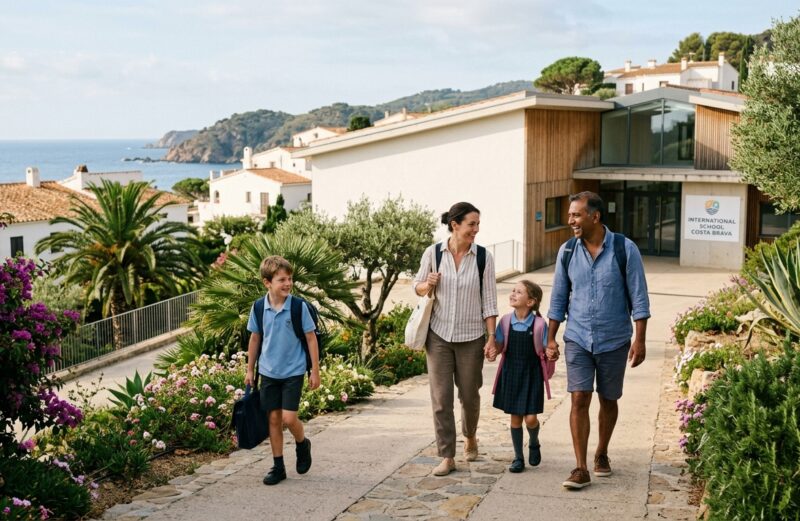
Moving abroad as a family involves many decisions, but school choice can shape almost every part of the relocation: where you live, how children adapt, which languages they use every day and how easily they can continue their education later. For families moving to Spain with children, looking beyond rankings and reputation makes it easier to find an environment that genuinely fits the child’s age, background and future plans.
Why school choice should be part of the relocation plan
Families often begin a move by choosing a city, neighbourhood or property and only then researching nearby schools. In practice, reversing that order can prevent unnecessary compromises. A school that suits one child perfectly may be difficult to reach from another part of the city, while some educational options are concentrated in particular urban or coastal areas.
Education also forms part of the wider lifestyle decision. Climate, safety, outdoor life and cultural opportunities are among the reasons families are drawn to living in Spain, but the daily school routine often determines how that lifestyle actually feels. A beautiful location loses some of its appeal if every school day requires an exhausting commute.
Think in terms of the family’s weekly routine rather than the map alone. Consider school transport, working hours, extracurricular activities and whether children will be able to build friendships close to home. These practical details become much more important after the excitement of the initial move has passed.
Understand the main schooling options in Spain
Spain offers several educational routes, and there is no universally best model for an international family. Public schools, publicly funded private schools known as concertados, fully private Spanish schools and international schools can all be suitable depending on the circumstances.
The useful question is therefore not simply which type of school is considered best. Parents should ask which system offers the right balance of continuity, language immersion, academic expectations and social integration for their particular child.
Public schools
Public education offers children strong exposure to the language and everyday culture of their new community. For families planning to remain in Spain for many years, this can help children develop local friendships and become comfortable participating in life outside an international environment.
Language needs careful consideration because education may involve Spanish and, depending on the autonomous community, a co-official regional language. The child’s age and previous language experience matter considerably; joining a new linguistic environment at primary-school age can feel very different from making the same transition shortly before important secondary examinations.
Concertado and private Spanish schools
Concertado schools occupy a position between the public and private sectors, while fully private Spanish schools can offer their own educational approaches and services. Families should investigate the individual school rather than relying on the category alone, because language policies, class sizes, extracurricular programmes and teaching styles vary.
It is also worth asking what costs fall outside standard tuition or contributions. Uniforms, meals, transport, materials, trips and activities can change the real family budget, so comparing total annual costs provides a clearer picture than comparing headline fees.
International schools
International education can appeal to families who expect further moves, whose children have already progressed through another national curriculum or who want qualifications that fit a specific university pathway. Curriculum continuity becomes especially relevant for older students approaching examination years.
For parents seeking continuity in an English-medium pathway, examining what an International School in Spain provides can be useful when comparing curricula, recognised qualifications, language support and admissions requirements with local alternatives. The objective should be to understand the educational model, rather than choosing a school purely because it carries an international label.
Choose according to the child, not the school label
Two children from the same family may need completely different things from a school. Age, personality and previous educational experience should influence the decision just as much as curriculum or location. A confident six-year-old may adapt rapidly to an unfamiliar language, while a teenager preparing for external examinations may benefit more from academic continuity.
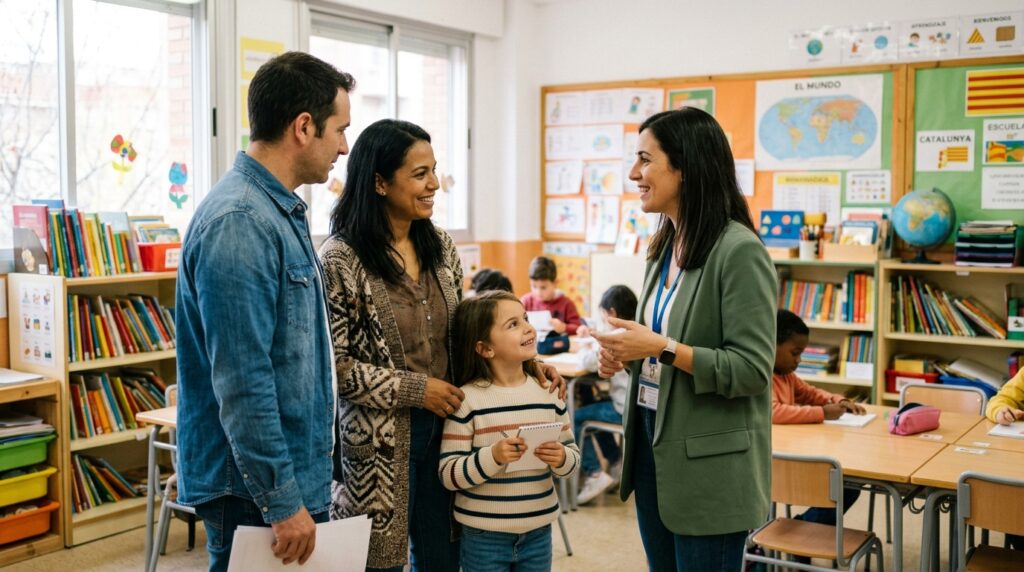
Parents should also consider how their child responds to change. Relocation already means a new home, friendships, routines and cultural environment. Adding a radically different educational system can be stimulating for some children and overwhelming for others. The right amount of change depends on the individual rather than a general rule about international families.
Before creating a shortlist, it helps to write down the factors that genuinely matter. These might include:
- Child’s age: younger pupils and examination-year students face very different transitions.
- Current curriculum: changing systems can create gaps or repetition in particular subjects.
- Language ability: consider both classroom learning and everyday social communication.
- Length of stay: a two-year relocation may call for different priorities from permanent settlement.
- Learning needs: ask how individual support is identified and delivered.
- Personality: some children thrive in large communities while others prefer smaller groups.
- Future destination: consider where the student may continue secondary or university education.
Once those priorities are clear, school visits become far more useful. Instead of asking whether a school is generally good, parents can investigate whether it is good for their particular child.
Look carefully at language, curriculum and qualifications
Language of instruction has implications far beyond vocabulary. It affects how quickly a child can participate academically, make friends and feel confident in class. Families should establish which languages are actually used for teaching, social activities and communication with parents rather than relying on terms such as “bilingual” without further detail.
Curriculum deserves the same attention. Students moving between British, Spanish, American, International Baccalaureate or other systems may encounter differences in subject sequencing, assessment and examination preparation. The older the student, the more important curriculum mapping becomes, particularly when qualifications influence university entry.
Parents planning to stay in Spain permanently should also think beyond the first year. A school that makes the initial transition easy should ideally support the student’s longer educational journey as well. Ask what happens at the end of each educational stage, which qualifications students receive and what pathways former pupils typically follow.
Social integration matters as much as academic adaptation
A successful international move cannot be measured through grades alone. Children also need friendships, familiarity and a sense that they belong in their new environment. Schools are often the first community that relocating families enter, which makes social integration an important part of evaluating them.
This distinction is closely related to the difference between inclusion and integration. A child may technically participate in classes without yet feeling comfortable enough to speak, make friends or contribute. True inclusion requires opportunities to participate meaningfully, rather than simply being present.
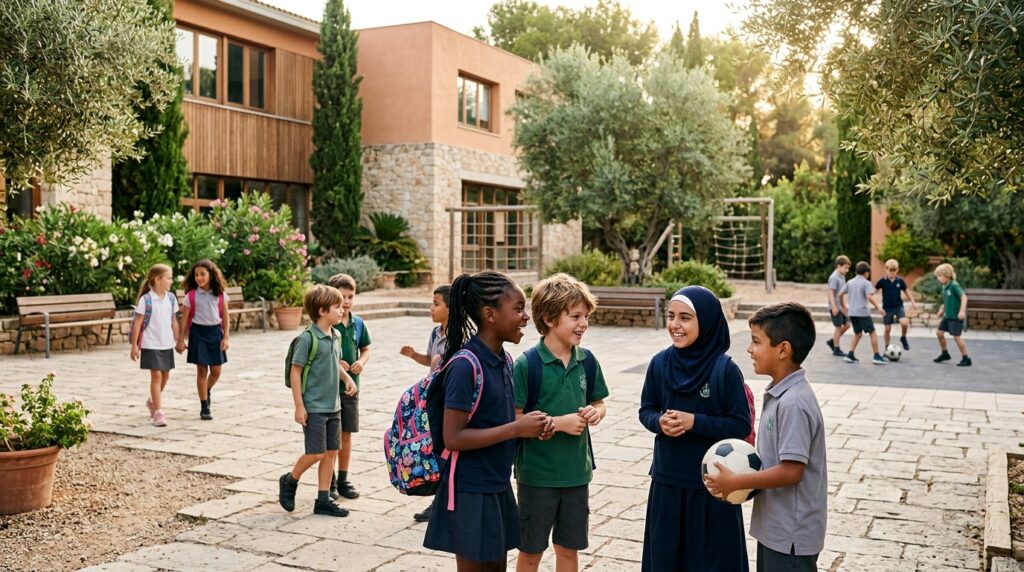
Parents can ask how new pupils are welcomed, whether buddy systems exist, how extracurricular groups are organised and what happens when a student struggles socially. The broader principles behind building inclusive communities apply particularly well to schools, where everyday interactions can determine whether newcomers quickly develop a sense of belonging.
What to examine during a school visit
Marketing materials are useful for creating a shortlist, but a visit reveals how the school operates in everyday conditions. Whenever possible, families should see classrooms in use, observe interactions between teachers and pupils and understand what a normal day actually looks like.
A productive visit involves more than inspecting facilities. Parents should arrive with questions connected to their own child’s situation, especially if they are relocating during the academic year or moving between different educational systems.
Useful points to investigate include:
- How are new international students introduced to classmates and routines?
- What support is available when a child is still learning the teaching language?
- How large are classes in the specific year group the child would join?
- How does the school communicate academic or social concerns to parents?
- Which curriculum and examination boards are followed?
- What extracurricular activities are available during a normal week?
- How much homework is expected at different ages?
- What happens when a pupil needs additional academic support?
- Where do students typically continue their studies after leaving?
- What costs should families expect beyond tuition?
The answers matter, but so does the way they are given. Clear and specific explanations usually tell parents more than polished slogans. A school should be able to describe its processes with practical examples rather than relying entirely on general claims about academic quality.
Consider the journey to school before committing to a home
A relocation plan can look perfect until the morning commute begins. Travel time affects sleep, family routines and children’s access to after-school friendships. A school that requires a long daily journey may reduce the advantages that initially made it attractive.
Check the route at realistic times rather than relying on an ideal estimate. Consider traffic, public transport, school buses and how parents will manage different schedules if siblings attend separate campuses. The most convenient location is often the one that works on an ordinary Tuesday, not the one that looks best during a weekend property viewing.
For this reason, families who have flexibility may benefit from identifying several suitable schools before finalising a neighbourhood. Education and housing decisions work better when considered together, particularly in areas where school places or international programmes are geographically concentrated.
Common mistakes international families can avoid
One frequent mistake is choosing primarily on reputation. Recommendations from other parents can be useful, but another family’s priorities may be completely different. A school praised for academic intensity may not suit a child who needs a gentler transition, while a highly international environment may not match a family’s goal of rapid local-language immersion.
Another mistake is focusing only on the first months after arrival. Parents naturally want to make relocation easier, yet a good decision should also work two or three years later. Consider how language development, examinations and future moves could alter what the child needs.
Finally, families sometimes underestimate the value of asking detailed questions before enrolling. Admissions processes provide an opportunity to discuss previous school reports, language level, learning needs and expectations. Specific information helps both parents and schools assess compatibility before a major commitment is made.
Build a school decision around the next stage of family life
Moving to Spain with children involves balancing education with a much broader change in family life. The right school should support both learning and a sustainable everyday routine, giving children space to develop academically while gradually becoming comfortable in their new community.
Rather than searching for a single definition of the “best” school, compare each option against the child’s age, language, curriculum history, personality and likely future. A thoughtful shortlist followed by detailed visits usually produces a stronger decision than rankings or reputation alone, and it gives the whole family a more stable starting point for life in Spain.